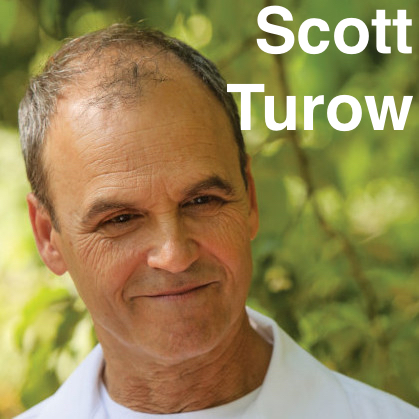
Jason Hartman hosts best selling author Scott Turow. They discuss what’s happened during the pandemic and as a result of the virus. They discuss technology and put it in the context of legality and the constitution. They also examine the pharmaceutical industry.
Announcer 0:02
speakers, publishers, consultants, coaches and info marketers unite. The speaking of wealth show is your roadmap to success and significance. Learn the latest tools, technologies and tactics to get more bookings, sell more products and attract more clients. If you’re looking to increase your direct response sales, create a big time personal brand and become the go to guru. The speaking of wealth show is for you. here’s your host, Jason Hartman.
Jason Hartman 0:40
It’s my pleasure to welcome Scott Turow to the show. He is a number one New York Times best selling author and partner at the International Law Firm dentons his legal thrillers have been translated into more than 40 languages sold over 30 million copies and made into Hollywood blockbusters. So really excited to Have him on the show. He was a former US Assistant Attorney in Chicago, where he prosecuted several high profile corruption cases, including the tax fraud case of State Attorney General William Scott. Turow, also was a lead counsel in operation gray Lord, the federal prosecution of Illinois judicial corruption cases. He’s the former president of the Authors Guild, and his most famous book titles are presumed innocent, innocent, ultimate punishment, a lawyers reflections on dealing with the death penalty, reversible errors, identical testimony and the new book of a last trial, Scott, it’s great to have you How are you doing?
Scott Turow 1:42
I’m doing great, Jason. Thanks. It’s pub day today. So I woke up to a really glorious review in the New York Times, which is of course for all authors a rare event. Yes.
Jason Hartman 1:53
Congratulations.
Scott Turow 1:54
I’m feeling celebratory.
Jason Hartman 1:56
Thank you. That’s great. Congratulations to you. So there’s a lot going on in the world nowadays, and you’ve certainly been around the legal industry, and then you’ve written a lot about the law and so forth, which is a very fascinating topic. It’s the foundation of civilization. It really is without rule of law. We’re all barbarians. You know. So where would you like to start? Do you want to talk about the last trial?
Scott Turow 2:21
Yeah, I mean, obviously, I’m proud of the book. And Sandy Stern, who is the central figure in the last trial was rusty savages defense lawyer, in presumed innocent. And he’s sort of been the first citizen of my fictional world, and it’s appeared usually as a minor character in almost every novel since then. So he was center stage and my second novel The burden of proof. And now, literally, 30 years later, he’s back taking his last bow. He’s defending a lifelong friend. Carol Pascoe, a Famous cancer researcher who’s won the Nobel Prize, but now has been accused of fraud and insider trading and even murder, because he won approval of a significantly successful anti cancer medication without disclosing its lethal side effects. So, he’s on trial and stern is dealing with all of the many consequences that come from being at the last round up as it were, his last time in court, his defense of a medication which ironically, has saved his life, and an old friend who he’s never really felt he knew with the core and as the trial progresses, he understands why.
Jason Hartman 3:47
Very interesting. Well, when we talk about the world of pharma, there’s a lot going on nowadays with COVID. There’s this documentary that’s been making the rounds, more conspiratorial and it’s been two taken down from YouTube and Facebook, and it’s called plan demmick. And it’s, you know, there are these patent wars and it’s just it’s really hard to know, who’s the good guy and who’s the bad guy anymore. The world has become so complicated. You know, everybody’s got an agenda from Bill Gates to Trump to, you know, to have course everybody has an agenda. Right? Right. How do we know what to make of this? You know, and, and Fauci and there’s so
Scott Turow 4:30
much to it, you know, I mean, people have accused me of anticipating all of this, because the last trial gives you a pretty extensive view of the pharmaceutical testing process. And it doesn’t answer any of the questions you just asked. It doesn’t, doesn’t identify good guys, or bad guys, but it does pose a lot of the questions that are frankly front center these days, and, for example, G. Livia, which is the drug that Carol Pascoe, Stern’s client, in the last trial, has has patented and brought to market is a very successful anti cancer medication. But what he neglected to disclose according to the government, is that it also kills a certain number of people after a year’s use. And so you have what is really at the heart of our drug approval system, which is the moral dilemma. Is it okay to save the life lives of a large number of people knowing that you are also going to kill a smaller portion
Jason Hartman 5:53
of people it’s so it’s the Karl Marx dilemma, you know, the needs of the many outweigh the needs a few right? Well,
Scott Turow 5:59
yeah, that’s the Basic Bentham Mike calculation. But how scrupulous should the FDA be? Their argument is, if we had known about this, we could minimize the number of deaths that are occurring due to taking this medication. And frankly, that’s a winning argument. There’s no disputing that. And that’s why the fraud charges are well founded. But on the other hand, how do you take a medication that actually helps a number of cancer patients, including, most Ironically, the defense lawyer himself, Sandy Stern, who has been a cancer sufferer? And was last time he showed up in my novels a decade ago? How do you take that off the market, and then wholly aside from that nest of issues, I ended up with some sympathy for the pharmaceutical manufacturers which, candidly, I didn’t go into this process. I went into To this research with none. And it is true because of the system that we have in the United States that pharmaceutical manufacturers have to spend a boatload of money, often much of it wasted in order to get one successful medication on the market. So when they get that drug, they price the hell out of it, and make all of us pay for it. Now, they are prisoners of the system just like the rest of us. But one of the things that goes by, in passing in the last trial, it’s the question of whether we could design a better system, right one in which the government took over the testing of pharmaceuticals, so that the drug companies didn’t have to pay for it, or face the temptation, of squeezing the results to sort of conform to their wishes.
Jason Hartman 7:54
Yeah, and then there’s the patent system and the way that works and the length of those patents. Of course, you’ve got to incentivize r&d. And you won’t do that without protecting intellectual property. But it gets really murky after that idea, you know, which is one of
Scott Turow 8:09
Yeah, one of the things I discovered, I had no idea that this was true. But up until like the late 70s, or the early 80s, the government was doing a lot of this research on its own, and then offering the patents and they found that manufacturers wouldn’t pick up the patent unless they got the exclusive right to make that drug. So a system in which which, which sounds like it’s in the public interest, where the government does the research, and makes the patent available to everybody. That didn’t work, because the manufacturer said, we don’t want to spend the money marketing a drug that that the guy across the street will then be able to make as well and ride ride free on You know, the money I’ve spent marketing it, right. So that patent system you’re talking about is actually the creature of a lot of good intentions. Hmm,
Jason Hartman 9:09
yeah, no, I agree. I mean, the concept is good. But you know, it gets murky in practice for sure. It’s interesting because Milton Friedman wrote a lot about the FDA and the way that works. And he made some really salient points. Because one part of it that we never see is that you can’t hear the dogs that don’t bark. We’d never evaluate as humans in any part of life, it seems, what never happened. And what never happened is sometimes the most significant thing of all, you know, and so when you have a disease that affects or an ailment of any kind that affects maybe a very small number of people, there’s no incentive to do much about that. Because, you know, if the FDA bureaucrat takes the risk of approving the drug, you know, they’re criers on the line. But you know if people died because they didn’t approve it, nobody really complains terribly much about that. Right? They make claims that they did approve. So
Scott Turow 10:05
except for the loved ones? Sure, I don’t I don’t generally adhere to what Friedman said, you know, for example, he didn’t generally believe in insider trading laws or he thinks that, you know, the market will take care of all of that, right. I always waited after the Great Recession in 2008. For all these free market economists to publicly proclaim there may have culpas because if you really think the market works faultlessly, then look what happened with the subprime mortgage market. So I’m not a I’m not a fan of fried mania and thinking,
Jason Hartman 10:46
but what all those libertarians will argue, though, is they’ll say, well, we only got here because we had these government sponsored entities like Fannie and Freddie, that, you know, shouldn’t be in the mortgage market. Anyway, right. So, you know, I it’s really murky, it’s hard. But, you know, that is what they argue and so legitimate
Scott Turow 11:06
argument. It’s legitimate. It’s just that I don’t think, I think, frankly, the mixture of public and private can often be lethal. And it has proven to be time and time again. And drug approval system is just one of those. Yeah, but I don’t believe that you can allow people and we’ve seen a little of this, by the way recently with the antibody tests for COVID-19 You can’t just have the FDA FDA saying, Oh, go ahead, put it out there. And then people say take the antibody tests they go Oh, I bet COVID-19 I don’t even know that I’m you know, and then right, you know, and then they you know, then then they you know, hug and kiss everybody they meet and lo and behold, they’re in the hospital Two weeks later. So, it these are Americans don’t like complication generally, yeah, in in their policy issues. And yet, that’s what makes novels I think, really good, which is not technical detail, but morally complex subjects. And certainly the drug approval process is one of them.
Jason Hartman 12:16
Yeah, no question about it. You know, you’ve got so much experience in in the legal world. Talk to us about what’s going on with the Supreme Court today. This is pretty interesting. Right? And, by the way, are they meeting virtually?
Scott Turow 12:28
Yeah, they are doing it. Interestingly, they’re doing it by teleconference. Apparently in one of their first their maiden voyage is with teleconference. Last week, one of the justices went to the bathroom and forgot to mute his phone. So
Scott Turow 12:44
that’s all on the record.
Scott Turow 12:46
So as a as a group of older, older people, they are proving as technologically inept as the rest of us been assuming that somebody is now figured out how to use the mute button. What is before the court today is I think one of the more significant cases they’ve taken up this year, which is our congressional committees. And separately, the district attorney for Manhattan have subpoenaed many of Donald Trump’s financial records from his bank, and from his accountant, and included, of course, are the tax returns that Mr. Trump has repeatedly refused to disclose. And what’s shocking to me about this case is as you as you mentioned, I was an assistant US Attorney in Chicago for eight years I’ve practiced part of a criminal defense fire for the last 30 years. And the law is always put tremendous weight on who’s holding the records. And if it’s a third person, as like as the accountants and the bankers are you as a criminal potential criminal defendant is a target grand jury investigation have no rights. You cannot intervene. So in. I’ve been practicing criminal law since 1986. I have never seen anybody successfully oppose a subpoena for records in the hands of a third party. So but here comes Donald Trump and he says, No, they can’t have these records. The Congress doesn’t have a legitimate legislative purpose in issuing these subpoenas. And you can’t have every local prosecutor all over the US issuing subpoenas that impact the president. Now, mind you, the president doesn’t have to do anything in response to these subpoenas. It’s not like Bill Clinton, in the paula jones case where he had to sit for a deposition which ultimately proved fatal to his reputation and in some ways to his presidency.
Jason Hartman 14:51
That was that was the funniest deposition ever with him with a coke cam there and you know him squirreling. What is the definition of Yeah, it’s ridiculous.
Scott Turow 15:03
Yeah. Well, I mean, there are members of the Supreme Court now like Brett Kavanaugh, ah, who was one of Styres prosecutors, who now with a straight face, having done all of that to Clinton argues that No, I don’t think the President should have to respond to criminal process while he’s president. But the issues here are, is the supreme court going to actually decide that they can tell Congress what is and isn’t a legitimate legislative purpose from the Trump side is screaming it’s all political. And of course it is. It is but that’s our elected representatives are supposed to be engaged in is expressing the political will of the people who elected them. So saying it’s it’s political is almost it that’s an oxymoron. So that One issue one big issue, will the Supreme Court actually stick its nose and the Congress has business and say yea or nay about a given subpoena, in which case, there will never be another congressional subpoena. That is not litigated through the federal courts. So that’s number one. And then much more significantly, to me is the Vance case, the New York da. He has made an extensive in camera showing to the court about why he wants to subpoena these records. And one of the things that is mentioned publicly, of course, as Michael Collins sworn testimony before Congress in which he impugned the president for filing false tax returns in connection with stormy Daniels, and also perhaps false financial statements with the banks from whom he borrowed both state and federal crimes but complicating This is That if, for example, Mr. Trump file false tax returns, not only he, but perhaps some of his business associates, and even perhaps his accountants are also guilty of crimes. So what the President wants the Supreme Court to do is to say to Mr. Vance, who’s made a scrupulous showing about why he’s doing this investigation, not only can you not investigate the president and preserve evidence for the time that he’s out of office, not only can you not do that, you can investigate anybody with whom he’s associated, who might also get prosecuted now, and that clearly sweeps way too far. And because of that, because the stakes politically are very high. And because the law to me seems so clear, we are going to know more clearly than we ever have before. How politicized this court is? Because if they reject particularly Vance’s subpoena, it will be a nakedly political decision. And it probably will harken back to bush versus gore is the most most politically driven decision the court has made. And in a decade
Jason Hartman 18:22
or so, you know, everybody, including justices have their bias, right. Do you think you know, I’m curious, the Supreme Court is supposed to be non political, because the appointments are for life. Do you think given that people are living so much longer than they used to when when that rule was made, it should still be a lifetime appointment? Or I’ve often wondered, I kind of think maybe it should be like a 10 year appointment or something like that. You know, you got really old justices here. And you’ve got to question their ability to to do what they do. Right? Yeah,
Scott Turow 18:56
I mean, a number of things to say about that. One, if I could wave a magic wand and suddenly become a framer of the Constitution, I would say a 20 year term gives people enough independence or a 10 year term and one renewal with renewal presumed unless there’s a two thirds vote in each house of the Congress to remove somebody from the court, so that so that there’s a long enough time span that they feel politically independent, right. Remarkably, there are very few tails, though, of justices remaining on the court and seeming adult about the only I think Thurgood Marshall was not in particularly good shape. Instead, the Supreme Court seems to be a case study. What maintaining a high level of intellectual activity seems to do to forestall dementia right right because you have all these 18 year olds 18 year old plus Sitting on the court. And whether you agree with Scalia or Ruth Bader Ginsburg, there is no way around the fact that they had add in have all their marbles. Yeah.
Jason Hartman 20:12
And that’s a great thing in itself. So I agree. It’s it’s definitely a study of that. And I think I think maybe more doctors should be studying the supreme court justices. That’s, that’s a good point. The legal industry in general, the Coronavirus crisis has created a lot of I talked about Joseph Schumpeter is one of my favorite economists, because he talked about creative destruction. And you’re seeing a lot of creative destruction. It’s really moved that forward. And one of the most primitive industries in our country has got to be the legal system. It’s just a really old fashioned, unwilling to adopt technology type of industry, but it seems to be modernizing out of necessity, with appearances via teleconference and so forth. And I think this is great. What do you think? And what do you see coming for the legal industry in the wake of COVID-19?
Scott Turow 21:06
You know, it’s odd that you say this, Jason because, in point of fact, the law has been radically transformed by technological developments, for good. And for L, for example, the invention of the word processor, making it so much easier to write has led to a gigantic multiplication in the number, the number of legal opinions to the extent that a lot of appellate courts now refused to let their written opinions actually be published, meaning that they can’t be cited in subsequent cases. I think that, by the way, is baloney. The court says something our whole common law system depends on being able to use that case as the basis for subsequently are given
Jason Hartman 21:58
the appellant justice want to be seen. cited, it seems like they’d want the credit for that.
Scott Turow 22:02
They want to be able to get rid of cases and quickly write and say things that they don’t want hung around their necks later on. But the point is that, you know, this didn’t exist 30 years ago when I came into the practice of law. So other ways that the law as been hugely influenced by technological changes is electronic discovery, right? Every most again, though, it’s multiplies the problems instead of having to look through hundreds, even thousands of documents, in a case it’s now hundreds of thousands. And every chief executive that I’ve ever represented has sadly learned that if you want to say something that might prove embarrassing, don’t say it by email. Yeah, right. So but here’s what I think. is going to become a cutting edge question, which is that the Sixth Amendment to the Constitution guarantees criminal defendants the right to confront their accusers. That’s what it says. And that’s always been understood to mean that you have to do that face to face. Do you know as happens in the last trial where Carol path goes, son ends up testifying against them. And the defense lawyer Sandy stern and his daughter Marta end up using to great advantage, the fact that this is a personal confrontation. And near the end of the cross examination, Marta gets Carol the defendant to stand up so that he’s at his son’s eye level. And he can literally make his son look his father in the eye as he tells this, he testifies against him. So the Constitution says every defendant has to have the right to do that.
Jason Hartman 23:59
To face the least All
Scott Turow 24:00
right. So the question is, if that’s happening electronically, does that satisfy the constitutional requirement? Yeah, I doubt that the Supreme Court is going to say it does, which means that criminal trials, at least, are going to have to be live events, whether you can do it in a civil case, so that the jury is seeing everybody on zoom or Skype or WebEx or whatever. It seems like
Jason Hartman 24:31
it might be impossible to do it with a jury, but with a bench trial, you can do it, I think. Yeah. You know, it’s just a jury part. If that just doesn’t work electronically, I don’t think right. Yeah, right now, but the idea that for these little hearings and pre trial motions, and so forth, that the attorneys don’t have to appear, I mean, that will make the system a lot more efficient and less costly for the clients. So I think that’s great news and depositions. Same thing. You know, this is stuff. This is not new technology. You know, we’ve had this, we could do this 20 years ago. But finally, the legal system is just catching on.
Scott Turow 25:09
That’s one of the things and if this, this proves your point, I think one of the most extraordinarily wasteful things that I witness regularly is sitting in a courtroom, a crowded court where a judge is holding status calls, and people complain about the cost of, you know, legal representation rightly, but that judge never thinks about the thousands and thousands of dollars that are being wasted by having those lawyers just sit there. Yeah.
Jason Hartman 25:41
So and and many of these courts have these absolutely stupid rules that are sitting there waiting. You can’t use your your electronic device, right. I mean,
Scott Turow 25:52
are you or your iPad,
Jason Hartman 25:54
right? Yeah, they’ll yo Yeah.
Scott Turow 25:56
Right. So because that means not me. Everybody is not paying attention to the most important person in the room, the judge.
Scott Turow 26:06
So I mean a system in which you’ve got a status call on Friday, and you’ve got to be available between the hours of nine and noon. And don’t you dare get up from your chair and miss the call is a much better system than forcing everybody to sit in the courtroom and do that. And so you and I can both hope that this the situation we’ve been in is one that leads people more toward that system. Yeah.
Jason Hartman 26:33
Any other things you see, as chairman, we got to wrap it up. But any other changes you see in the legal system coming out of this?
Scott Turow 26:39
I one thing I see is a lot of constitutional challenges. We’re going to find out how far this can go within the meaning of our federal and state constitutions. So there’ll be a lot of litigation about how much the various rights that we’ve always always had mean being able to stand before a judge in person plead your case.
Jason Hartman 27:01
And also, you know, one of the things I saw right away when these quarantines started is one of the fundamental thing is the first amendment and the right to peaceably assemble. Well, you can’t assemble. And I don’t mind, you know, government doing what they did for a month or so. But after that, I kind of think, you know, you gotta quit. But that’s
Scott Turow 27:23
a that’s a again, that’s like the drug issues that are at the heart of the last trial. You know, if people want to worship together, or people want to protest together,
Jason Hartman 27:34
if you want to have a rally, you know, you can’t do it.
Scott Turow 27:37
Can’t can they be prohibited from doing it? bearing in mind that they are creating a risk to the health of large communities. One of the things nobody has written about is that if you look at April 23, and 24th, which were 10 to 11 days after Easter, there was a huge spike across the country in reported code In factions, I don’t think that’s accidental. I think some people went to church, many people gathered with their families, and as a result, they got sick. So the proof is there. But the question is, does the constitution prohibit those activities? You know, the worship the assembly? And I, you know, that’s a toughy these. Yes. Yeah. No question that people people got sick in Wisconsin, demonstrably by going to vote because the Democratic governors wish to put off the election was overruled by the Republican legislature. And as a result, people got sick. And yet, can we really allow elections to be postponed? When they’re the fundament? They’re the basic thing in our society. I would say you can’t,
Jason Hartman 28:54
you can’t. Yeah, another interesting one is you know, and I don’t really like the guy A lot of times but Elan Musk, and you know, he wants to be arrested now, for opening his plant, that’s gonna be an interesting case. And I have a feeling he’s gonna win that if they do arrest him and I just think there’ll be so much backlash against the government, but I don’t know, it could go the other way, you know, I don’t
Scott Turow 29:18
know how his assembly line is set up. If the workers are literally distant from each
Jason Hartman 29:26
other, that could work, okay, you know, it doesn’t have high risk environment.
Scott Turow 29:30
If it’s a meat processing plant, that’s where everybody is shoulder to shoulder and they’re all handling the same things within, you know, instance of each other. That might be a problem. And then, you know, then you’ve got the other side of the coin, which is because of the steps they took, maybe because of the weather, California has been a far lower risk environment than, you know, my hometown of Chicago. So all of these questions become very common
Jason Hartman 29:58
and they will be coming The answers will become apparent in the years to come the months and years ahead, Scott, it’s been fascinating talking with you give out your website. Of course, books are available in all the usual places. But do you have a website you want to share?
Scott Turow 30:12
I do Scott turo.com and there’s three T’s and a row there. No dots or dashes just SEO tt turow.com. Thanks. Excellent. Scott Turow. Thanks for joining us, Jason. What a pleasure. Thank you.
Announcer 30:30
Thank you so much for listening. Please be sure to subscribe so that you don’t miss any episodes. Be sure to check out the show’s specific website and our general website Hartman Mediacom for appropriate disclaimers and Terms of Service. Remember that guest opinions are their own. And if you require specific legal or tax advice, or advice and any other specialized area, please consult an appropriate professional and we also very much appreciate you reviewing the show. Show, please go to iTunes or Stitcher Radio or whatever platform you’re using and write a review for the show we would very much appreciate that. And be sure to make it official and subscribe so you do not miss any episodes. We look forward to seeing you on the next episode.