
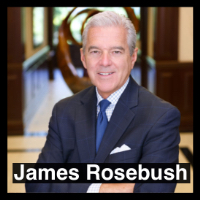
Jason Hartman starts the show congratulating real estate investors buying in the suburbs. He discusses the importance of running numbers. He answers a few listener questions and then hosts James Rosebush, a former Deputy Assistant to President Reagan to discuss his latest book, Winning Your Audience. He shares tips to sound more like President Reagan who was a great communicator.
Announcer 0:03
speakers, publishers, consultants, coaches and info marketers unite. The speaking of wealth show is your roadmap to success and significance. Learn the latest tools, technologies and tactics to get more bookings, sell more products and attract more clients. If you’re looking to increase your direct response sales, create a big time personal brand and become the go to guru. The speaking of wealth show is for you. here’s your host, Jason Hartman.
Jason Hartman 0:40
It’s my pleasure to welcome James rose bush. He was deputy assistant to President Ronald Reagan, and chief of staff to the First Lady Nancy Reagan, and senior advisor at the White House. His first book, First Lady public wife, was lauded as the first book that assessed the non elected job of the First Lady. He is founder and CEO of growth strategy, a company focused on management strategies, finance, fault management, marketing, etc. He’s pioneered a holistic approach to organizational consulting. And he’s had clients like JP Morgan, mercedes benz, tutor, investment bankers, trust, and many others. He’s the best selling author of true Reagan. What made ronald reagan great, and why it matters and the new best selling book, winning your audience deliver a message with confidence with confidence of a president. Well, hey, James, welcome. I certainly want to learn how to be as good a communicator as Ronald Reagan. And by the way, this is not political. It’s just he was a good communicator. And you know, he crossed the aisle really well. Tip O’Neill was his good friend. He even gave a eulogy at his funeral. I remember, you know, Reagan really through his humor and his speaking style was able to bring A lot of gaps politically, wasn’t he?
James Rosebush 2:02
Yes, he was Jason great to be with you, by the way, and you’re a great communicator. And I think you may share Reagan’s a secret and being called a great communicator. And that was because he loved his audience. He had respect for the American people wherever he went in the world. He believed that if he could only reach his audience, unfettered and unfiltered by the media, he could convince them of anything. He was an evangelist, or freedom wherever he went in the world. It was his message that inspired him. And it was his message that inspired his audience. And these are the things to remember about Reagan and why it was that he was able to achieve this status. And it was that he didn’t have an ego in this fight. It’s very unusual Jays. I mean, most of us care about what our listeners think about as you know, are they falling asleep or are they love flying with their phone, you know, all these things are scary to us. 75% of all people are deathly afraid of public speaking, Reagan didn’t have an ego in the fight. He didn’t care if you liked him or not. And the great thing about that was that it allowed him to be free of fear.
Jason Hartman 3:18
Mm hmm. Interesting. Interesting. Okay, so so maybe that’s the first tip then talk to us a little bit about and you know, there are a bunch of things so I may be, you know, going out of order here a little bit, but one of the things that I think really typified Reagan so well is his humor his uh, you know, I’m not like that I wish I could be like that I’m just I’m just not funny. But you know, Reagan was great at like defusing situations. I’ll share two examples. His There you go again, you know, that was so it was just cute how he would do that, you know, he would have his opponent tearing into them and you know, with him salts that most people would have come back and like said, you know, and it would have been like this fight, right? And Reagan just said, There you go again, you know, like, like, this is the normal thing we’d expect from you. And it just put people in their place and the audience loved it. Any any thoughts on that one?
James Rosebush 4:17
Yes. And you know, Jason, that was at the debate with Jimmy Carter in Cleveland. And that was the first time I had the honor of meeting the Reagan. And these comments that you’re referring to were extemporaneous on his part. One time we were at the Congress of in Lisbon in Portugal, and they decided in protest to Reagan speaking there to release thousands of white doves to fly all around this massive, gilded Hall. And Reagan looking up said, Oh, you want peace. That’s what we want as well. So it disarmed the people in the hall and the media by thinking they were going to make a big stroke and to oppose Reagan, and to characterize him as a warmonger which, of course he was not. And he turned it around, through again, not being piqued, or irritated or angry, but by being so secure himself, that he was able to turn it around on a dime and make it work for him. And this is it’s a unique I have to say, how many of us can really do that? When when someone is confronting us or, you know, but wherever we went, Reagan had to confront protesters. Many times we had one time we had a group that had a license to their bottles of blood on it. So I mean, everywhere we went all day and all day long across from the White House in Lafayette Park, there were protesters we don’t even have this today. So people forget because history, unfortunately is a thin veil today. People, but we had these kinds of protests as well. But Reagan didn’t BB them. And he told us never to be anything but a well not found, which is something I often share with the people that I coach, not to be a found and to talk too much, but to be a wealth of information to people that are looking for it. And that was one of the ways he was able to use humor to disarm. He also because he was a person who was conflict averse. He developed storytelling and humor to deflect interest on him personally. He was a son of an alcoholic, so he didn’t want anyone to probe too much into his character. Hmm, interesting. Interesting.
Jason Hartman 6:45
You know, another example of Reagan’s and this isn’t necessarily humor, although it turned out to be really humorous, but his ability to reframe things was amazing. You know, and I guess part of that What you started off with saying he sort of didn’t have an ego about it because, you know, the ego says, and you know, egos not all bad, I think the ego serves a lot of great purposes without ego probably be no progress, you know, but it’s something that needs to be managed, obviously. And Reagan would would like reframe something and kind of, you know, like you say, you know, let it slide off his back, like the dove example and so forth. But, you know, one of the ones that everybody remembers is is Reagan Mondale, you know, when the issue of his age came up, and then yeah, pletely flips that whole thing. And he says, I will not make my youth my opponent’s youth and inexperience an issue in this campaign. Oh, my God, it was brilliant. How do you think like that?
James Rosebush 7:48
That was, I know, incredible. Totally unbelievable. Yeah. No, he was, you know, he said, he marveled in because he was the little by people because he was a screen actor. As if an actor could not become president today. And he said, I’m amazed that anyone could become president if they hadn’t been trained as an actor. So Reagan found his footing as a public speaker when he was a sophomore in college, Eureka college, rural college where I’ve spoken to actually on the stage where reagan did when he was 20 years old, and he believe it or not, was a part of a protest group to fire the president of his college because they didn’t like his policies. And here he was, he was speaking to a rally. And he says, For the first time in my life, I learned the power of oratory, to bring people to action. And later in his life, he refers to that first the very first oration as his most important speech that he ever gave in his life, which goes beyond the Berlin Wall speech, and it goes on beyond what he gave, I think is one of his most inspired speech after the challenger, astronaut, tragedy, the good one, too, you know, that was a really good one. But here he says, and he defines great speech making by saying he uses the power of words and the way he expressed them to bring people to action.
Jason Hartman 9:20
Yeah, it’s truly amazing. Okay, well, take us through kind of the nuts and bolts. I mean, look, everybody listening, even if they didn’t like the politics, they probably at least if they’re being even somewhat objective, they have to agree that Reagan was really, really good. And he had this ability to get people to like him, even if they disagreed with him. And he could cross the aisles extremely well and get things done. You know, how does somebody listening apply what reagan did in their own life? I mean, everybody listening has to get up in front of an audience once in a while nowadays, maybe not in front of a live audience, but online. line in a virtual audience. And you know, we all can benefit by being better communicators? What are the nuts and bolts of this? How do we decode the raygun skill and apply it to our own lives?
James Rosebush 10:12
Well, that’s an excellent question. And the first thing, of course, the first thing to do is to buy my book because as an Amazon, number one bestseller is a handbook and a guide that will teach you it’s been called the new Bible of public speaking and that everyone should have it on their desk. So I was brought up by a dad who taught public speaking, he was a Dale Carnegie instructor. So every day basically, my speech was being judged by my dad. And so after learning from him, and starting to speak broadly, when I was in junior high school, and continuing on through my days of being a scholar of the Rotary International scholar, going to the Soviet Union being followed by spies and that sort of thing, I had to come back and speak about it. I knew I had to become a storyteller. So then when I work for Ronald Reagan in the White House, I see this other extraordinary speaker. So I had to convey this in the book so everyone could learn these things. So what how do we answer this question? That is, the first thing is you have to become imbued with a message. I talked to lady lady Thatcher about this, the iron lady who was the longest serving Prime Minister of Great Britain. And she said, She’s afraid every time she got up on the platform, and I said, You’re kidding. She said, because I said, it doesn’t come across. She said, this, I do two things. Jim, the first thing I talked to myself, and I say, Okay, well, you can do this, you can do this, you can do this. She says, I repeat that mantra a dozen times. Then she says, I throw my weight into the issues I’m talking about. And within a split second, I’ve lost myself. So this is critically important. getting over that. defeating the fear being imbued with a message. And the next point is to love your audience. I remember one time and this The White House Mary Martin, that famous screen and in theater actress, I said to her, why do your audiences love you so much? And she threw her arms around me, which was nice. And she said, Jim, I was born in Texas, and she said I was brought up loving people, and they love me back. And this is precisely Reagan’s one of his secrets. He loved the American people. And they felt that I went into a bar with him one time in Dorchester, Massachusetts, right in the midst smack in the middle of enemy territory, so to speak. Everyone came around and they love talking to him. They love spending time with him. You know why? He didn’t judge them. These were, you know, working class people. They were I’m sure they were all voted for the democrat candidate, and they loved Ronald Reagan. Why? Because he loved them. He wasn’t a person of judgment. He didn’t condemn the American people. He didn’t say we’re in MLS. He didn’t say the complete opposite
Jason Hartman 12:58
energetic card. Jimmy Carter was like, yeah, opposite, you know? Yeah, it was Yeah. Interesting this so the the pendulum tends to swing in the political world, right, we, we move from liberal to conservative and back again, you know, that’s just sort of the nature of history, if you will. Um, so I’d say a couple things to what you were saying, you know, when it was Margaret Thatcher and Reagan wrote, you reminded me when you were speaking about it, of a famous quote, maybe people have heard I really like it. And it I don’t remember who said it, but it’s let he who wants to move and convince others be first moved and convinced himself. So it’s got to be a message that really, that you really believe in, you’ve internalized it’s, you know, you feel like you’re on a mission to bring it to the world, right? rather than something that’s sort of like an academic project where, you know, you’re giving an oral report like in school. That’s a lot different than something you really believe in like Thatcher or Reagan, right. And then secondly, just The idea of focusing outside of oneself rather than focusing internally, you know, it get up in front of an audience. And yeah, of course, you’re nervous, you know, that’s normal. But that means you’re focusing on you rather than focusing on them. Right. So yes, two things are helpful. minds.
James Rosebush 14:21
Well, they are. Thank you for that court. I think that’s excellent. And just to illustrate that, two things, so Reagan goes in 1985. He goes to speak to the religious broadcasters conference in Orlando, and he calls the Soviet Union and evil empire. Now, the media when absolutely not, even though previous presidents had said the same thing. Why was it that they went so crazy because
Jason Hartman 14:46
the words communism, what else?
James Rosebush 14:49
Well, yes, they do. Yes, they do. But there’s another aspect of that, and that in that supports, just the quote that you just shared with us and that is Reagan. Believe That the Soviet Union was an evil empire. He believed it. And because he believed it, he came across as more powerful. And that is why they resisted it so much. Trump is resisted so much because he’s successful. Now, let’s talk just another quick example. when reagan goes to the Brandenburg Gate, he’s already met with Gorbachev, he knows he’s established a relationship of some degree of trust with him. So he goes to the Brandenburg Gate, and this is how he says it, Mr. Gorbachev, tear down this wall, emphasis on where he wants the wall to go. He knows and he’s so confident that that wall needs to come down to provide the reunification of Germany and the freedom of all its citizens to worship God. He believed that so much and he wanted it to happen and he visualized it. This is another thing when you’re speaking, visualize what you want. That will give brilliant And listening to your speech. So here’s Reagan, he’s already talking about walls for about 10 minutes. So he uses the emphasis and the cadence to say now when he talks about this wall, he tells Gorbachev where he wants wants it and where is it? He wants it down. And guess what happened? It came down. I know.
Jason Hartman 16:22
It’s amazing. Yeah, I got I gotta tell you something about that. I’ve been to Berlin three times. And a second time I was there. I remember we went on this tour with this clearly, very left wing guide, who was a young guy who was a student, you know, and he took us around or we had a, you know, Small tour. And he kept talking about when Kennedy visited Berlin and said, You know, I too am a Berliner right in his speech. And he completely neglected to tell anybody about Reagan who is actually the guy that got the wall torn down. It was unbelievable to me that he could just leave that out. You know that minor detail. It’s totally incredible. But yes, Reagan did achieve that. And he achieved the fall of communism now. Bush number one, or the elder Bush, I should say, you know, he presided over it and over that transition, but it was it was Reagan that made it all possible.
James Rosebush 17:21
Oh, yes. Make no mistake about that. Absolutely. Okay, so the wall
Jason Hartman 17:25
comment and visualizing what you want to happen in advance, right. Is that the point of that? Well, yes,
James Rosebush 17:32
that’s a part of that’s a part of storytelling. So, this is most of communication, we had to be clear about this is non verbal. It is from consciousness to consciousness. This is very important to understand. And there was an article in the Wall Street Journal today about john paul the second Pope, john paul, the second commonly called JP two, and I had the extraordinary honor of being blessed by john paul the second, three times Now I’m going to tell you that this person described this in this article today in the Wall Street Journal and I had the same experience. john paul, Pope, john paul, the second took my hands. This is three times, twice in the Vatican, and one time on an airstrip where his plane and the President’s plane was landing at the same time and we had a brief bilateral meeting right on the tarmac. He was a person, he could take your hands and bless you and look into your eyes. And with barely speaking a word. he communicated the power and the light and the presence and the beauty of holiness. This is how you communicate more powerfully than even using words consciousness to consciousness. Now 65% of all communication is nonverbal. What does that mean for the speaker? That means First of all, that you have to understand that Secondly, it helps you bring down the forest Well a partition between you and your audience. And it puts the onus on you to learn and understand your own authenticity, who you are. To Know yourself. self knowledge is the beginning of all progress. and developing the capability in you to communicate to a could be a group of five people, that could be a group of a million. knowing yourself, knowing what you believe. And having an appreciation for your audience is how you convey yourself and your message non verbally. Now, what happens, the audience will get settled in and they will make a decision already before a word comes out of your mouth. It’s the way you carry yourself the way you dress and your non unspoken message which is heard in the audience, even before you open your mouth.
Jason Hartman 19:56
Okay, so what do we do about that? What are those specifics. I mean, Reagan had this sort of, you know, he was tall. I mean, he was good looking, you know, like, how do how does everybody apply that? How do they carry themselves? Or what body language tips
James Rosebush 20:10
can you share? Well, competence in your message really transforms any any kind of a physicality. But I will say this, that having respect for your audience, dressing in your favorite clothes, so you’re not thinking about it, having your hair cut, you know, caring about how your appearance will convey and what it will convey to your audience.
Jason Hartman 20:37
In today’s world, we are in trouble in most of those categories.
James Rosebush 20:42
I know. I know. I mean, I don’t want people speaking to me front in their sweatpants, right. But I mean, we can I guess we have to tolerate that on zoom calls. But it all goes into how you feel about yourself and your message. If you feel that you have an important message and that’s in your heart. One time when I was with Nancy Reagan, we Went to a drug abuse center where there were thousands of kids that were learning whether they were would be they completed their rehab program and would be going home or not. And we sat through three or four hours of learning whether these kids are going to be reunited with their parents. And I’m telling you, Jason, big every day the Secret Service was crying. We were crying, even the White House press corps, they were crying, which is unheard of. And so Nancy Reagan had these prepared remarks, of course, and I was sitting next to her and we looked at each other and we were like, no, this will not do, she can stand up there and make prepared remarks. So at the end of the program, again, this massive gymnasium, and she takes the mic. At first she turns to the parents, and she tells them how much she loves them how much she understands that the hurt of a child in a parent’s heart is something that’s almost impossible to bear. And she talks like this and then she turns to the kids and she tells them I love you, I support you. I want to help you, you’ve got a great life ahead of you and so forth. Well, again, I mean, everyone was just sobbing, she sat down and on the way back to the hotel that night, in the back of the limo, we both had our we just exhausted, wiped out. And I said to her, I think this reminds me of a lotus saying, I’ve always liked and that is, when the heart speaks. However simple the words, they’re always accepted by those who have hearts. So if you if you even have a simple unsophisticated message, if you want to inspire an audience, so you want to help an audience or you want to relate to the people in your audience, and you speak from your heart to their heart, you will win. Yeah,
Jason Hartman 22:47
very good point. Okay. Any other things to kind of wrap this up?
James Rosebush 22:51
Well, I’ll tell you sort of a cute story. So I have I coached a lot of CEOs, salespeople, that sort of thing and one one time, I had a guy He spoke with a very high voice. And he was a mature gentleman, and he was embarrassed by his voice. And I said, you know, you can change your voice. No, I cannot change my voice. This is the way I was born. I have it. There’s nothing I can do about it. That’s not true. I said, and I took a basketball which I have in the room where I was coaching. And I said, I asked his permission, of course, and then I pushed it in his gut. And I said, I want you to feel the hot air coming up from your stomach, warming your vocal cords. Then I want you to spend the next month listening to baritone singers on on your radio or YouTube. And I want you to mimic those, and he was able to lower by an octave the sound of his voice. Now the deeper sounding voice is better heard by the listening ear and taken more seriously. That man was able to impact his audience. reach his goals easier because he was willing to change the tone of his voice. Absolutely. And, you know, I heard a speaker talk about that a couple of weeks ago on a on a zoom presentation. And he, he said, some people feel and he was a voice coach, some people feel that changing their voice is fake. And he likened it to a piano and he says, Look, a piano has I think he said, 88 keys, I don’t really know.
Jason Hartman 24:26
But he said, You know, when each key sounds different, but it’s still a piano, the piano is not faking it. It just uses different keys for different occasions. Right. And, and so so that’s very true. Yes, you you can you can do that and have have command of that. You know, the other thing maybe you could speak to before you go, is that Reagan, you talked about how he would almost impart like a visualization of the path forward in his speeches. The Berlin Wall was the example there, but he also was very good. Taking complex issues and making them simple. I remember the time when he was stacking up dollar bills on a podium and using that to illustrate, you know, saying, well, this is the size of I think that national debt would go to the moon, if you stack these $1 bills or something like that. Now, it’d be to Pluto. But I think that was what he was talking about. But he would, he would help people really understand things with analogy and metaphor and all kinds of tools, right? Maybe you can speak about?
James Rosebush 25:36
Yeah, so I always tell people, they need to be a Sherpa. We don’t have many people who are speakers who know what that means. A Sherpa is a guide that gets you on the ascent up to the top of the mountain with you know, surviving. So I think we need more speakers that are surface, but I’ll give you another example. I mean, one is like you speak of when we were out at the reagan ranch. We took a pallet of pallets of documents that were required for, let’s say one drug submission or something like that. And of course, he just loved things like that, though that was a visual image. But the most important one, remember this JC ever did was the night. He gave his go going, goodbye going away goodbye speech from the oval office when he was leaving, you know what I think the next day they were leaving the White House. And he says this. I’ve often spoken of that shining city on a hill. But I don’t think I’ve ever described what I meant when I saw it. Right. So he pulls you in, right? He’s telling you, he has this vision of a shining city on a hill. Now he’s concluding his eight years as the leader of the greatest nation in the history of the world. And he’s explaining that is the light of American exceptionalism ever grows dim, the rest of the world will fall into chaos. This is how he describes the shining city on a hill. So the listener, of course, is thinking about light. And they’re thinking about this what this shining city on a hill is because he describes governor Bradford’s quotation and why he described his landing in America with this great potential in this great hope of what this land could become. Reagan was a person who was imbued with this kind of picture as just like Lincoln, Reagan, Lincoln, you know, he was raised on only two books, the collected works of Shakespeare in the Bible. Reagan was similarly raised by an itinerant minister mother, and was told he had to memorize the Bible several times. So he used the alliteration and the color and the the teachings of the Bible to really pattern the way he taught. And he greatly respected, terrible teaching. So Reagan love to instruct through parables. And that’s one of the reasons that his speeches are memorable.
Jason Hartman 28:05
Yeah, absolutely very good stuff. It’s this is such an important skill set, it really is possibly the most important skill set. Because the communication isn’t always from a podium. Sometimes it’s just interpersonal. And a lot of the same ideas translate to an interpersonal platform as well. Good stuff, James. give out your website books available in all the usual places. I just downloaded the audio version. I can’t wait to listen. give out your website.
James Rosebush 28:34
Oh, thank you so much. It’s been great to be with you. You can find out more about this book and about my coaching on impact speaker coach.com WWE impact speaker coach.com and the name of the book is winning your audience. You can find it anywhere, get an Amazon, audible or how far back and I think you’ll enjoy it.
Jason Hartman 28:58
Good stuff James rosebush. Thanks for joining joining us. Thank you. Thank you so much for listening. Please be sure to subscribe so that you don’t miss any episodes. Be sure to check out the show’s specific website and our general website Hartman. Mediacom for appropriate disclaimers and Terms of Service. Remember that guest opinions are their own. And if you require specific legal or tax advice, or advice and any other specialized area, please consult an appropriate professional. And we also very much appreciate you reviewing the show. Please go to iTunes or Stitcher Radio or whatever platform you’re using and write a review for the show we would very much appreciate that. And be sure to make it official and subscribe so you do not miss any episodes. We look forward to seeing you on the next episode.

